



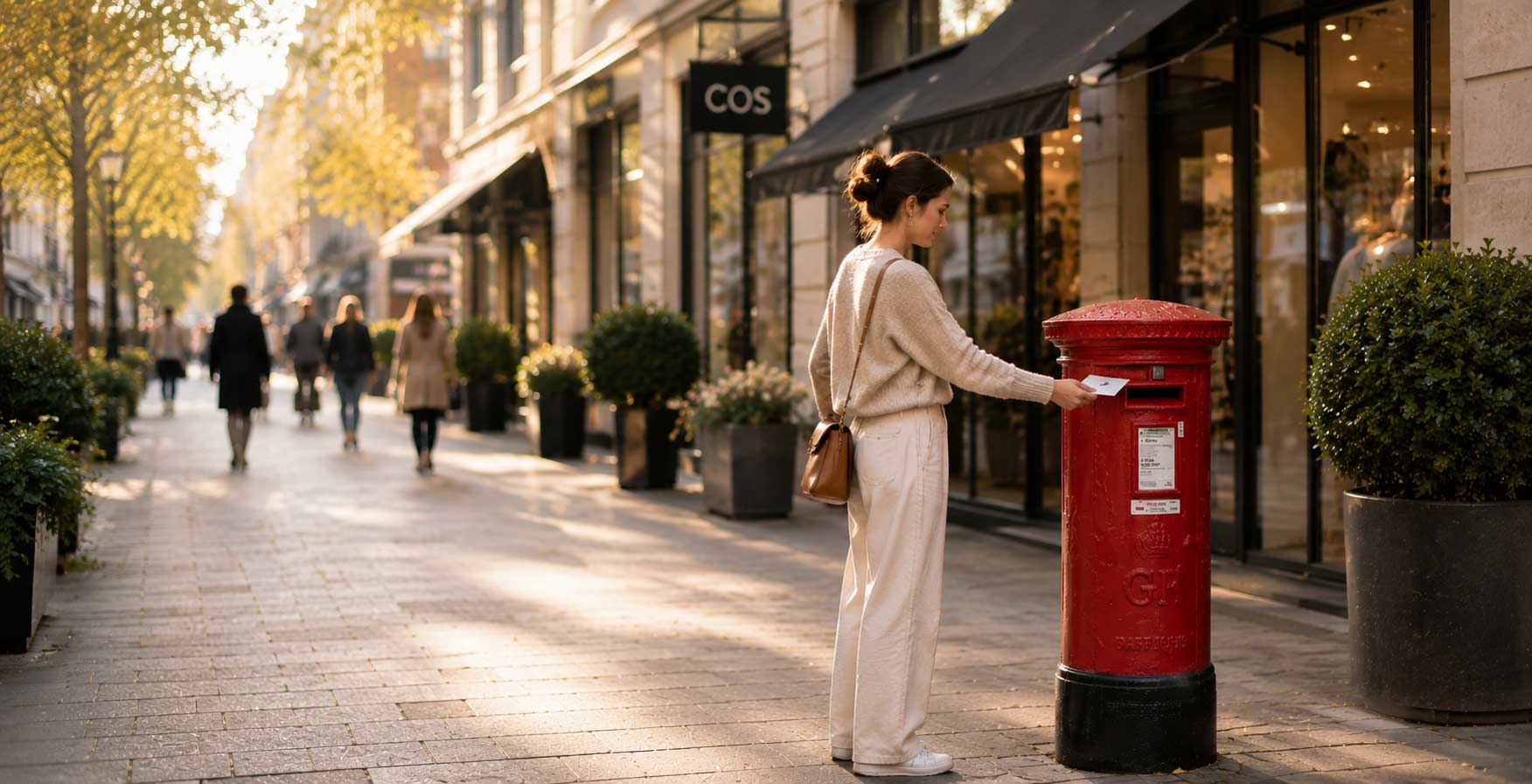
Current Royal Mail Postage Rates
Prices correct as of April 7th 2026. Always verify with the Royal Mail website for the latest updates.
| Format | Weight | 1st Class | 1st Class Signed For | 2nd Class | 2nd Class Signed For |
|---|---|---|---|---|---|
| Standard Letter | Any | £1.80 | £3.95 | 91p | £3.00 |
| Large Letter | Up to 100g | £3.30 | £5.45 | £1.55 | £3.80 |
| Tracked 24 | Tracked 48 | ||||
| Medium Parcel | Up to 2kg | £6.75 | £5.65 | ||
| Up to 10kg | £8.95 | £7.75 | |||
| Up to 20kg | £14.25 | £12.10 | |||
Envelope and Packaging Sizes Explained
Staying within the right size and weight category is the most reliable way to control postage costs. Below are the four Royal Mail formats, what fits inside each one, and the packaging that works best.
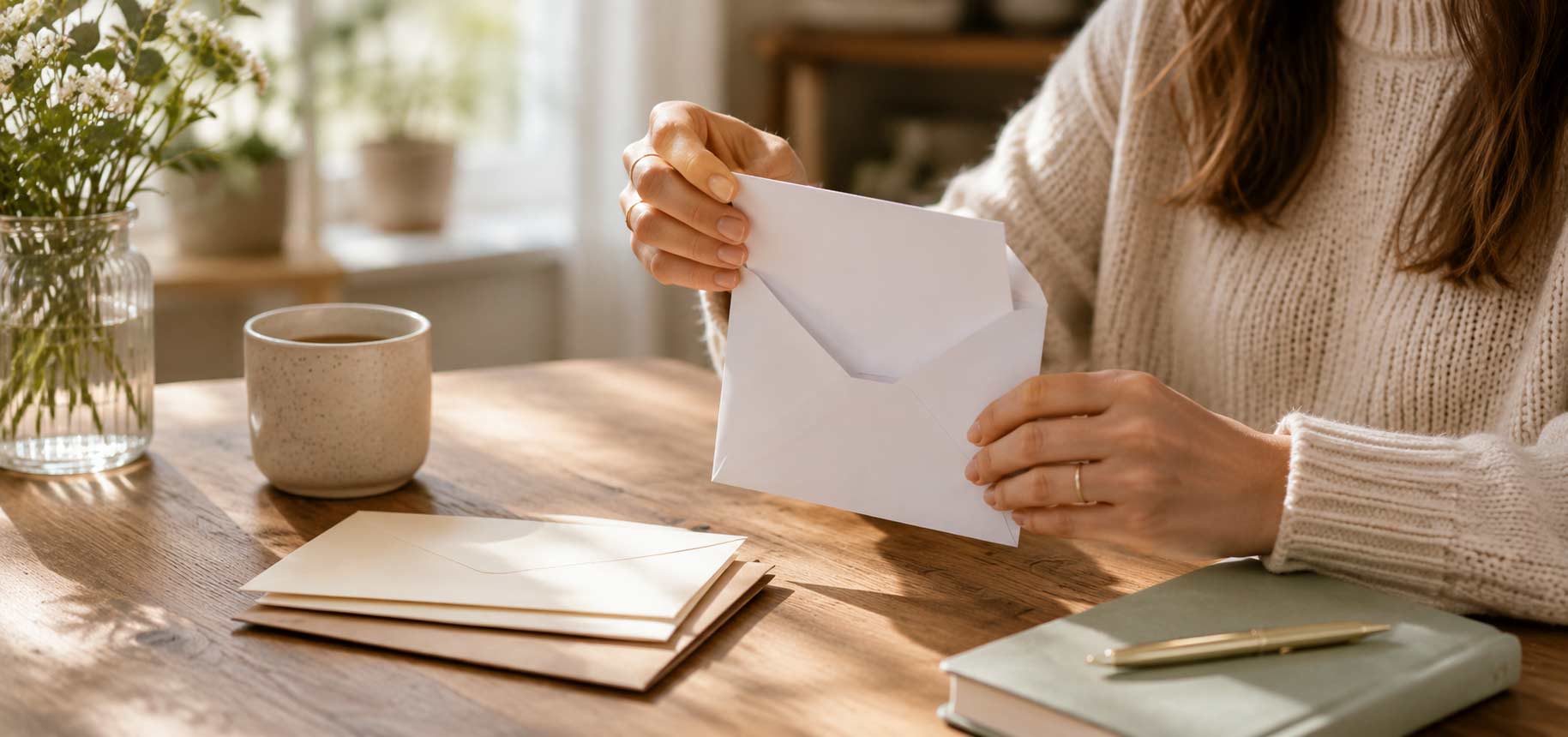
Standard Letter
Max dimensions: 240 x 165mm
Max thickness: 5mm
Max weight: 100g
Typical use: Single-sheet letters, invoices, greeting cards
Best formats: DL envelopes (A4 folded in thirds), C6 envelopes (A6 cards), C5 envelopes (A5 documents)
The cheapest way to post a standard letter is 2nd class at 91p. To qualify, the envelope and contents combined must stay within all three limits.
Standard Letter Envelopes


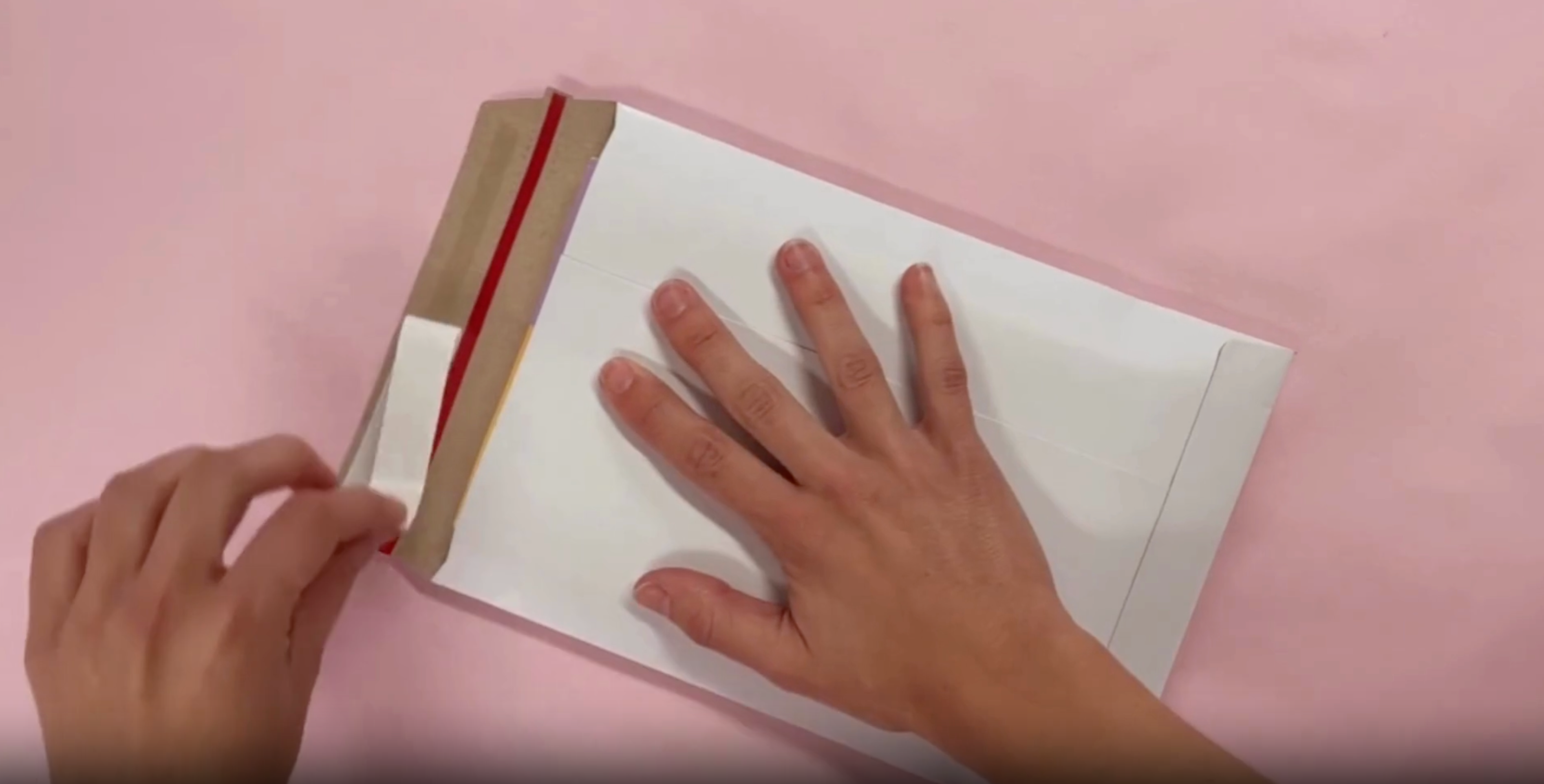


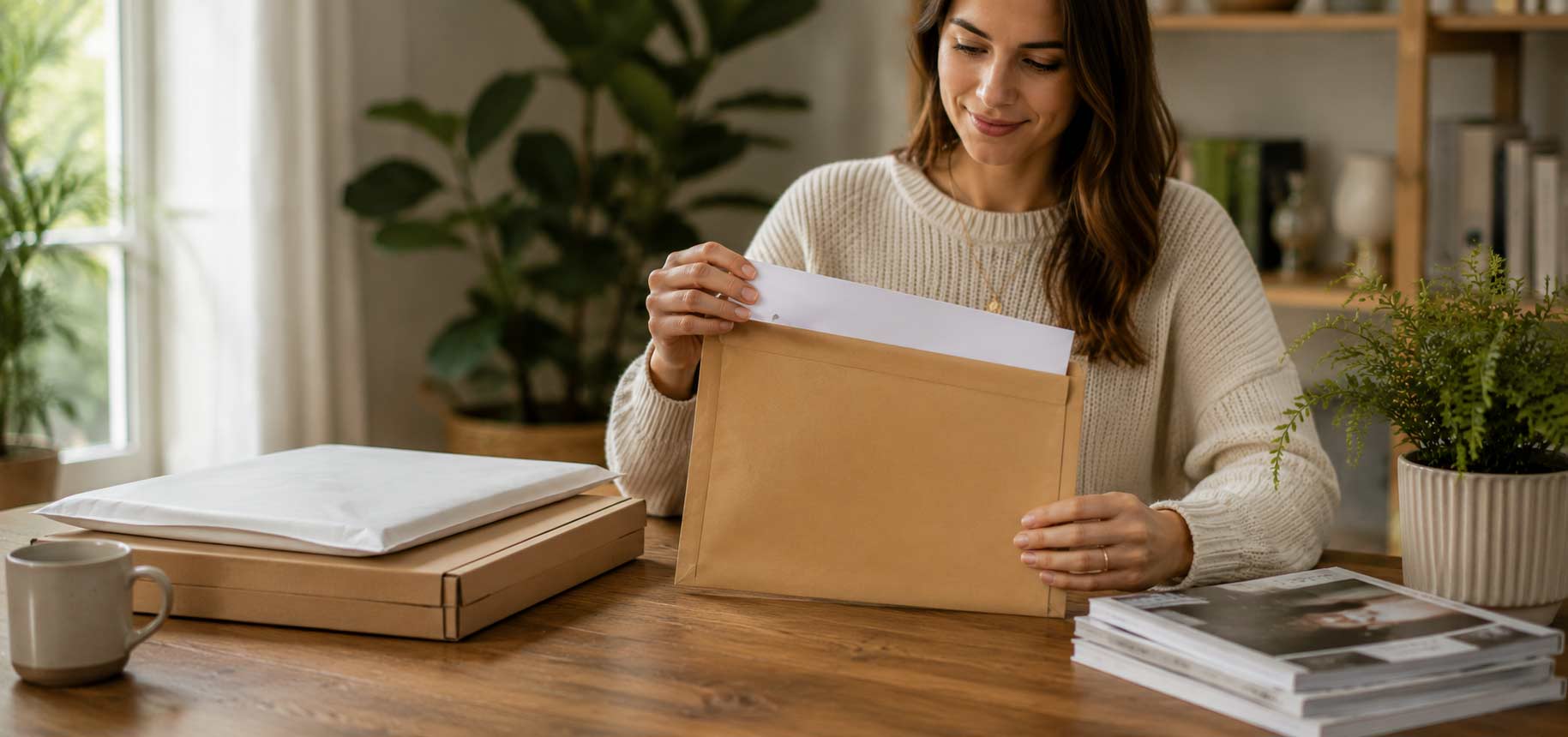
Large Letter
Max dimensions: 353 x 250mm
Max thickness: 25mm
Max weight: 750g
Typical use: A4 documents flat, magazines, catalogues, multiple-sheet mailings
Best formats: C4 envelopes (A4 flat), large letter size envelopes.
A C4 envelope (324 x 229mm) fits A4 documents flat and sits comfortably within the large letter limit.
Large Letter Envelopes


Small Parcel
Max dimensions: 450 x 350 x 160mm
Max weight: 2kg
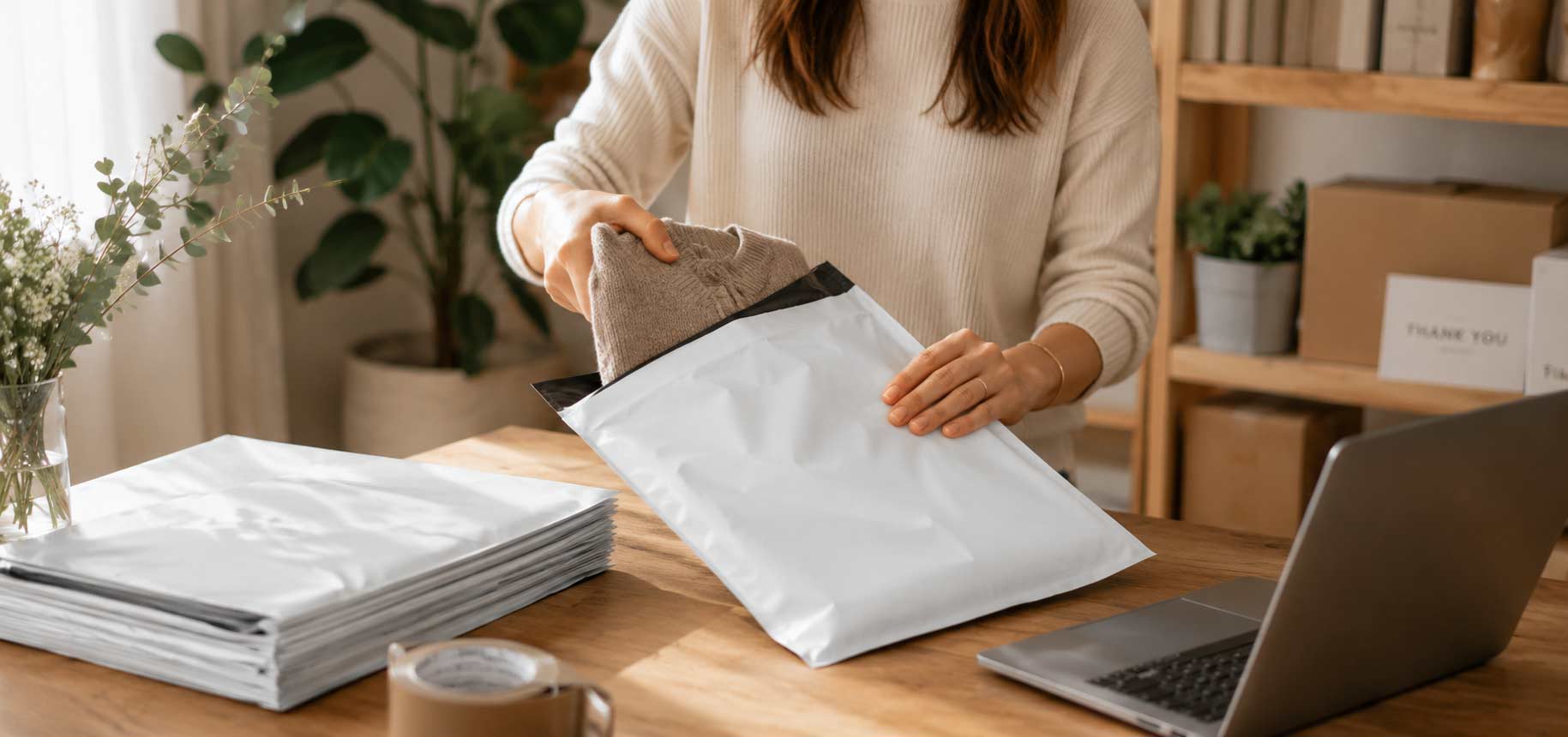
Typical use: Clothing, accessories, books, electronics, small homewares
Best formats: mailing bags (lightweight, cost-effective), bubble bag mailers (fragile items), book wrap mailers (flat rigid items)
Using a mailing bag rather than a box keeps weight down and often reduces postage cost within the small parcel tier.
Small Parcel Packaging


Medium Parcel
Max dimensions: 610 x 460 x 460mm
Max weight: 20kg
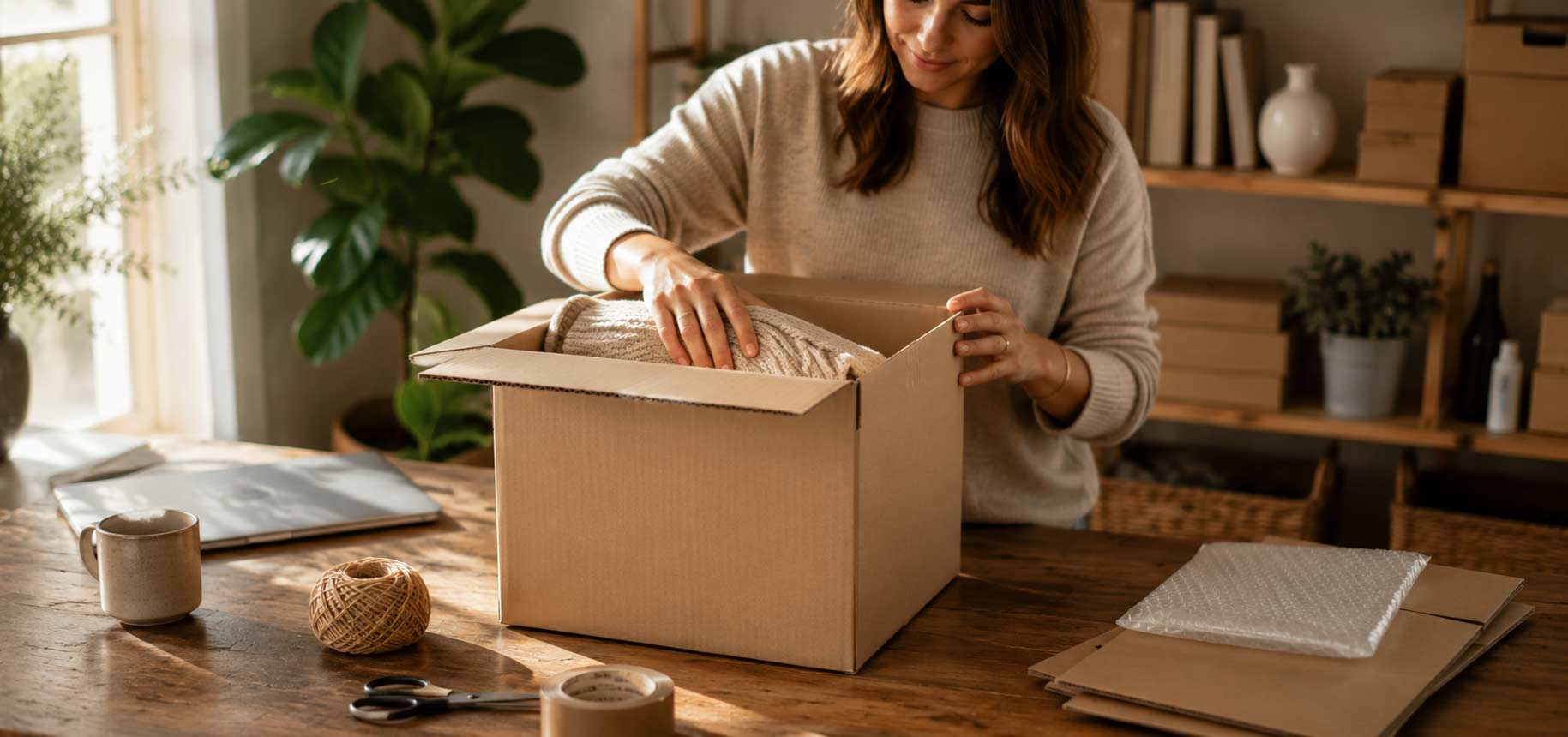
Typical use: Gift boxes, multi-item orders, bulkier homewares, clothing bundles
Best formats: single wall cardboard boxes (standard e-commerce dispatch), cardboard boxes (heavier goods), large mailing bags (bulky soft goods)
Choosing the smallest box that fits your product reduces void fill, postage cost and packaging waste.
Medium Parcel Packaging


Essential Royal Mail Packaging Guidelines
Getting the format right is half the job. These guidelines help ensure your parcels are accepted, scanned correctly and delivered without issues.
Address and barcode: Attach a barcode, full recipient address with postcode, and a UK return address on the exterior.
Protective packaging: Items with sharp edges or irregular shapes need padded mailers or rigid enclosures to prevent damage and injury to handlers.
Label clarity: Print labels clearly. Thermal-printed labels are the most reliable for barcode scanning.
No tape over labels: Adhesive tape over a barcode prevents scanning. Seal the package, then apply the label to a clean surface.
Backup label: Place a second copy of the address label inside the parcel in case the exterior one is damaged.
Cushioning: For fragile items, use zig zag void fill or book wraps to prevent contents touching box walls.
Secure sealing: All openings must be sealed with appropriate kraft packing tape. Do not rely on tuck-close flaps alone.


Frequently Asked Questions
What Is The Largest Envelope That Qualifies As A Standard Letter?
What Is The Largest Envelope That Qualifies As A Standard Letter?
The maximum dimensions are 240 x 165mm with a maximum thickness of 5mm and weight of 100g. A C5 envelope (229 x 162mm) fits perfectly within this category for A5 documents. For A4 folded in thirds, use a DL envelope.
What Are The Current Royal Mail 1st And 2nd Class Rates?
What Are The Current Royal Mail 1st And 2nd Class Rates?
Standard Letter: 1st Class £1.80 | 2nd Class 91p
Large Letter (up to 100g): 1st Class £3.30 | 2nd Class £1.55
Medium Parcel Tracked 24: Up to 2kg £6.75 | Up to 10kg £8.95 | Up to 20kg £14.25
Medium Parcel Tracked 48: Up to 2kg £5.65 | Up to 10kg £7.75 | Up to 20kg £12.10
Correct as of April 7th 2026. Verify on the Royal Mail website.
Which Envelope Size Requires Extra Postage?
Which Envelope Size Requires Extra Postage?
Any envelope exceeding 240 x 165mm, 5mm thickness or 100g moves to the large letter category and requires higher postage. Browse our large letter size envelopes for formats that qualify at the large letter rate.
What Packaging Is Best For E-Commerce Dispatches?
What Packaging Is Best For E-Commerce Dispatches?
For soft goods like clothing, mailing bags are the most cost-effective option as they are lightweight and self-seal. For fragile items, bubble bag mailers add cushioning without significant weight. For rigid or structured items, single wall cardboard boxes offer the best protection.
How Do I Determine Postage For Irregularly Shaped Items?
How Do I Determine Postage For Irregularly Shaped Items?
Measure dimensions and weight precisely. If the item does not fit within the standard letter or large letter specifications, it will be classified as a small or medium parcel. Using flexible mailing bags can help keep irregular items within size limits where the product allows.
Can I Track My Royal Mail Parcel?
Can I Track My Royal Mail Parcel?
Royal Mail offers tracking on Tracked 24, Tracked 48 and Special Delivery Guaranteed services. Use the Track and Trace service on the Royal Mail website to monitor your item.
What Should I Do If My Parcel Is Lost Or Delayed?
What Should I Do If My Parcel Is Lost Or Delayed?
File a claim with Royal Mail via their Claims Centre. Keep proof of postage and any tracking information. Claims must typically be submitted within 80 days of posting.
What Our Customers Say
See why we’re trusted as by thousands of UK businesses for packaging and envelopes through our customer reviews.

Envelope Printing Customer

Envelope Customer

First Time Customer

Wholesale+ Member

Envelope Printing Customer

Wholesale+ Member

Sample Customer

Packaging Customer
Useful support for flat pack cartons
